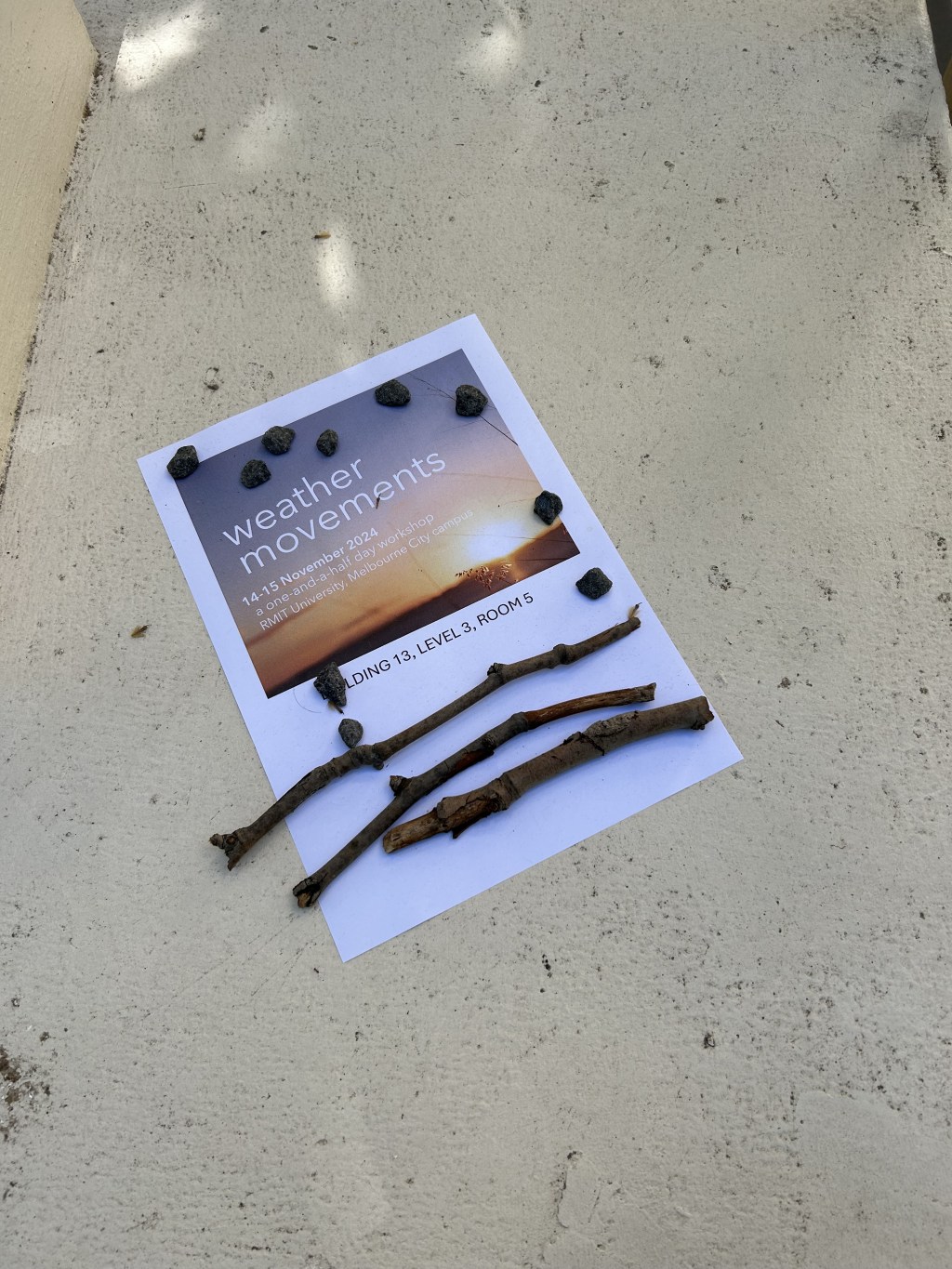
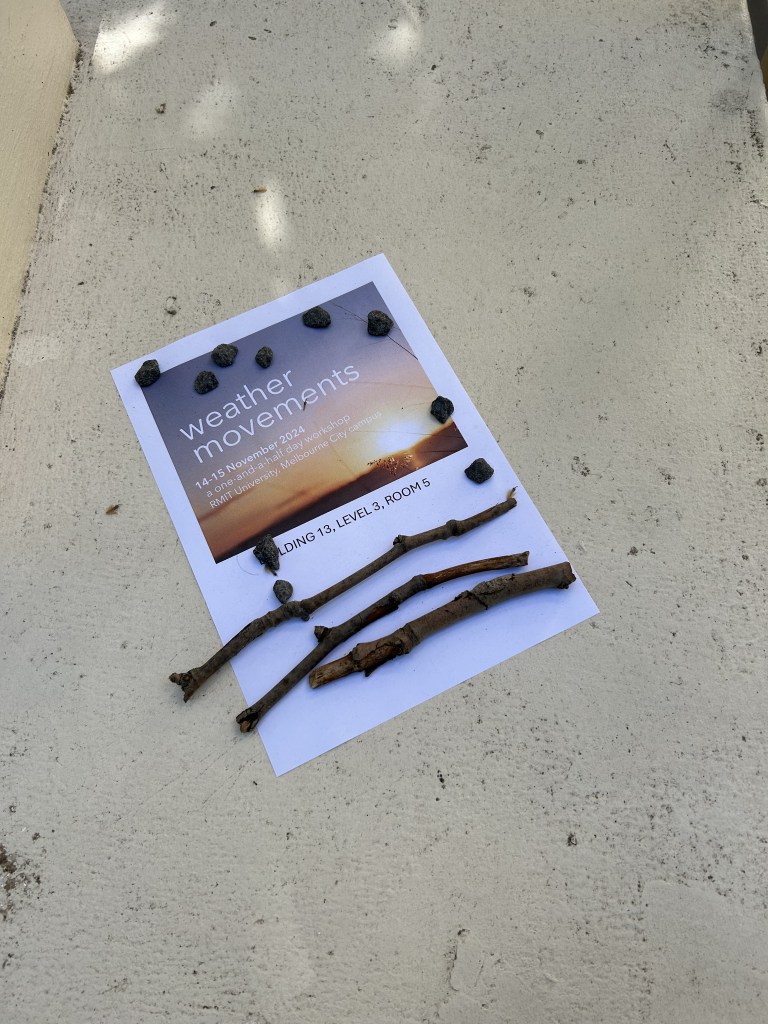
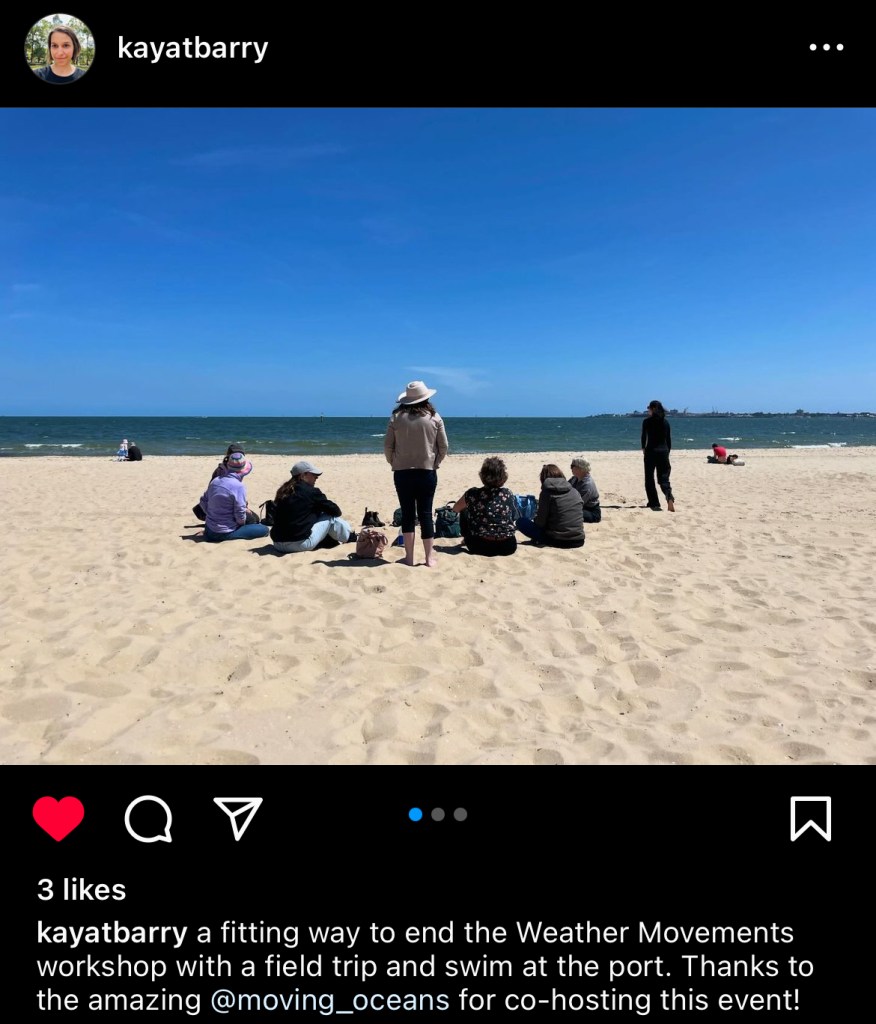
From 13-15 November 2024, I attended “WEather Movements” at RMIT on the lands of the Woi WUrrung and Boon Wurrung people of the east kulin nation. It was organised by Kaya Barry (GRIFFITH) and Rebecca Olive (RMIT), and it was an incredible few days of sharing interdisciplinary cultural research about weather and climate change (broadly understood). I felt like i found more of my people at this conference.
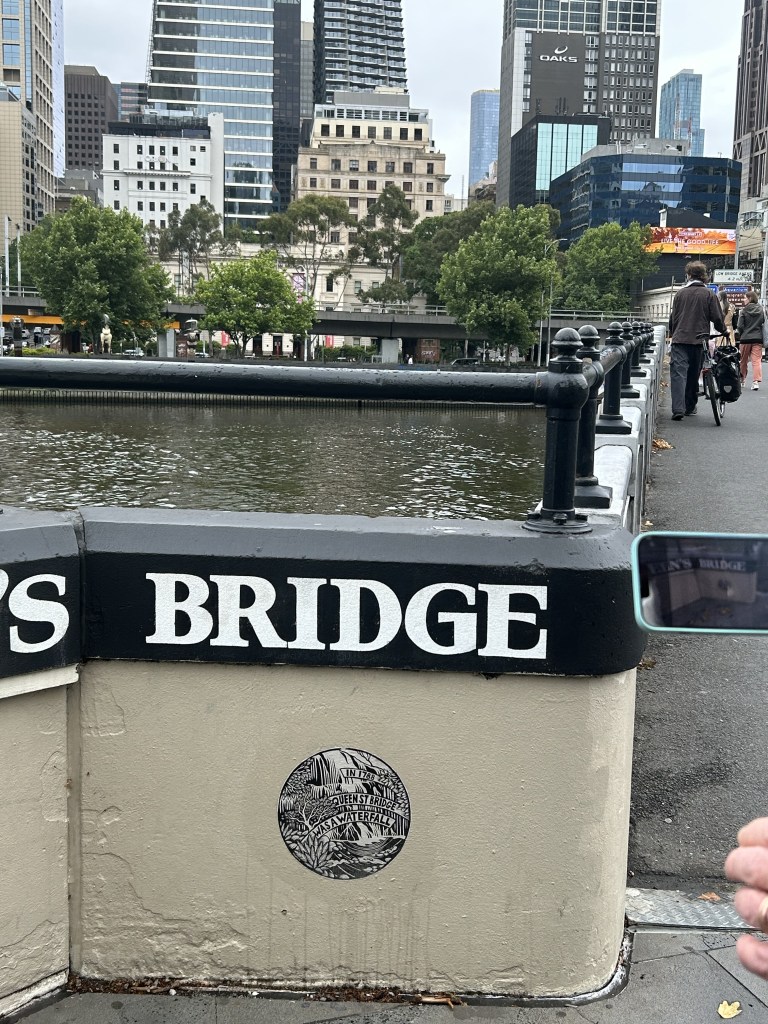
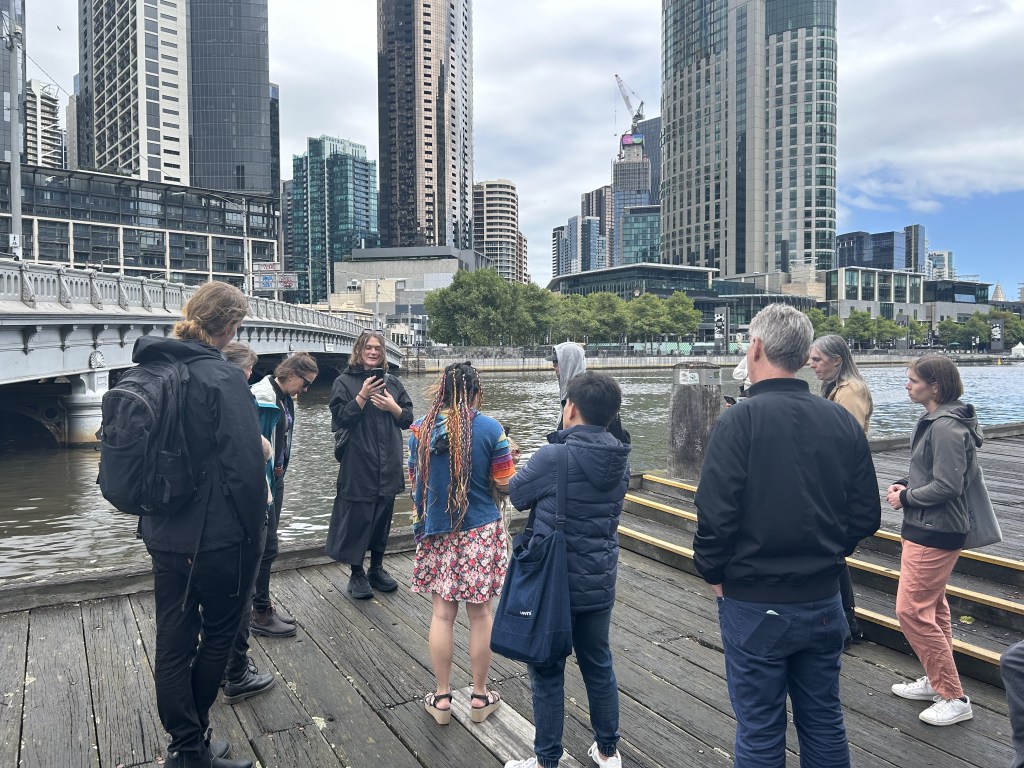
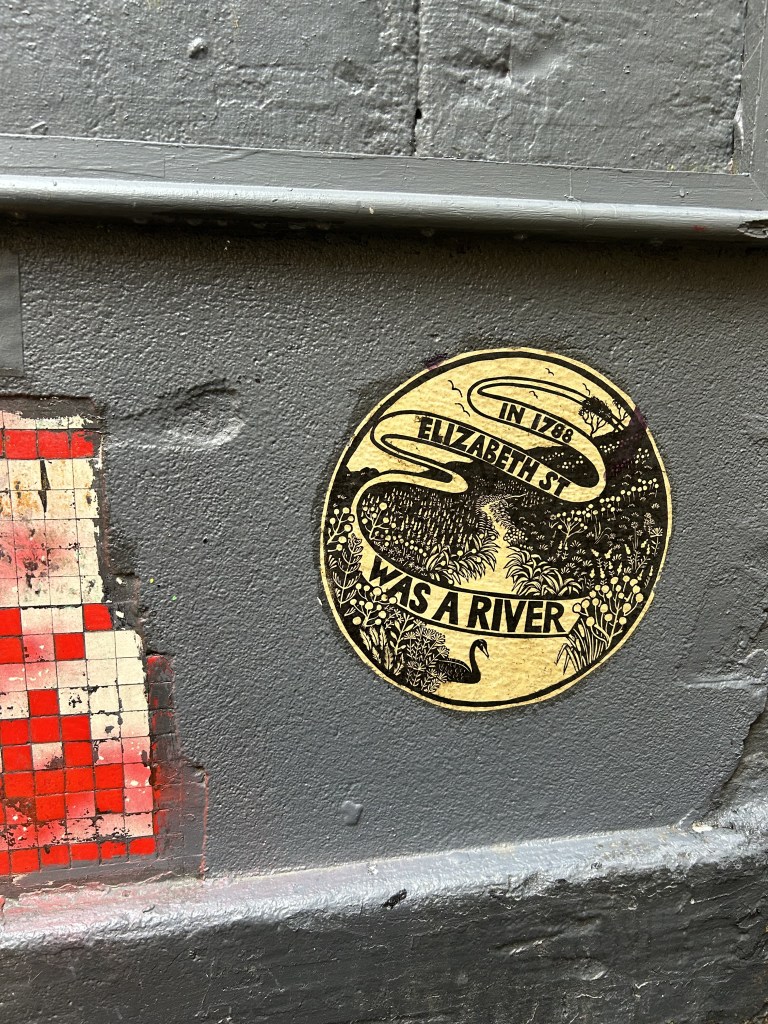
Disciplines varied including cultural practice/arts, literary studies/critical theory, geography, cultural studies, media/gender and cultural studies, indigenous studies. It started with a walk led by Willow Ross and Madeline Frolich examining the cultural history of Birrarung and downtown Naarm (Melbourne). The walk touched upon a range of issues that were also at the heart of a really great project I recently learned about at RMIT by Dr Christine McFetridge. “An Inconvenient Curve” involved unlearning Settler colonial ways of seeing the river and studyied the indigenous and colonial history of the river in depth for an exhibition at docklands. On this day, It was great to have a walk in the city and learn even more about the river that complemented and extended what I learned when spending time with mcfetridge’s work.
Though I’ve lived in Australia my whole life, I haven’t spent that much time in NAARM and especially not along this river. but these two projects together I feel like I have a good understanding of the river’s history. And also of how similar and different the stories of colonial cities are. I used to spend time walking rivers and streams in sydney, The GoolAy’yari (Cooks River) and the Tank Stream (under Sydney CBD) in particular. The colonial experience is Similar in that the logic of colonisation is homogenous and the struggle for decolonisation feels very similar place to place in Australia because it is up against similar forces. but it varies because the specific geographies of place and the varied resistances of the local indigenous people and allies shape the process.
It is hard to describe the conference as a whole and maybe I will come back and add to this post as the ideas percolate. but what felt really significant to me about the conference as a whole is looking at weather to access cultural issues seems to unilaterally ground people in place and time. The logic of weathering in the queer feminist mode as I understand it (attending to the presence of different bodies Situated both in specific places but also with their own temporalities –– histories and trajectories) does something one’s investigations of the environmental crisis. in particular it increases specificity, and slows you down, makes you attend to local politics in a way that cannot be (or is not usually) replicated when the central concept is “climate change” (because of the scope of cc). The fact of a lot of people doing this mode of culturally attuned weather research together in different places and using different methods (and subtly different definitions of weather/weathering) contains a specific politics and ethics for me. In many cases the work feels incidentally feminist, queer and anti-colonial even when this is not made explicit, because of the necessary attention to bodies, diversity, place specificity and repetition. Though I’m sure this is not entirely accurate description of everyone’s politics, I felt at home with these folks.
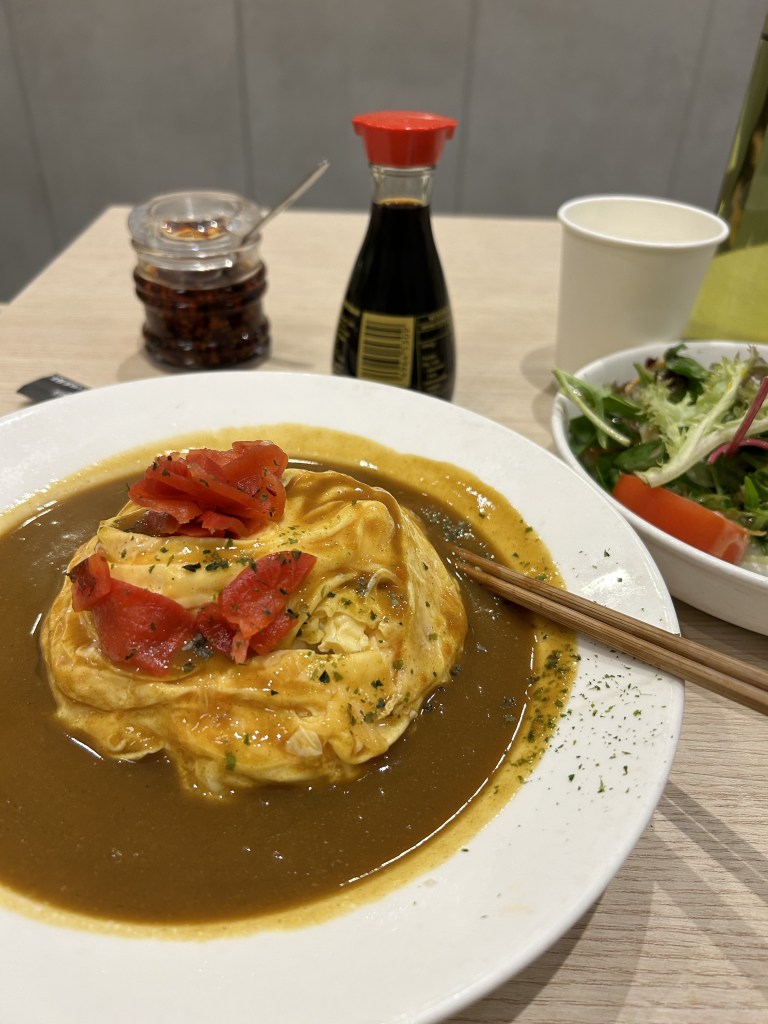
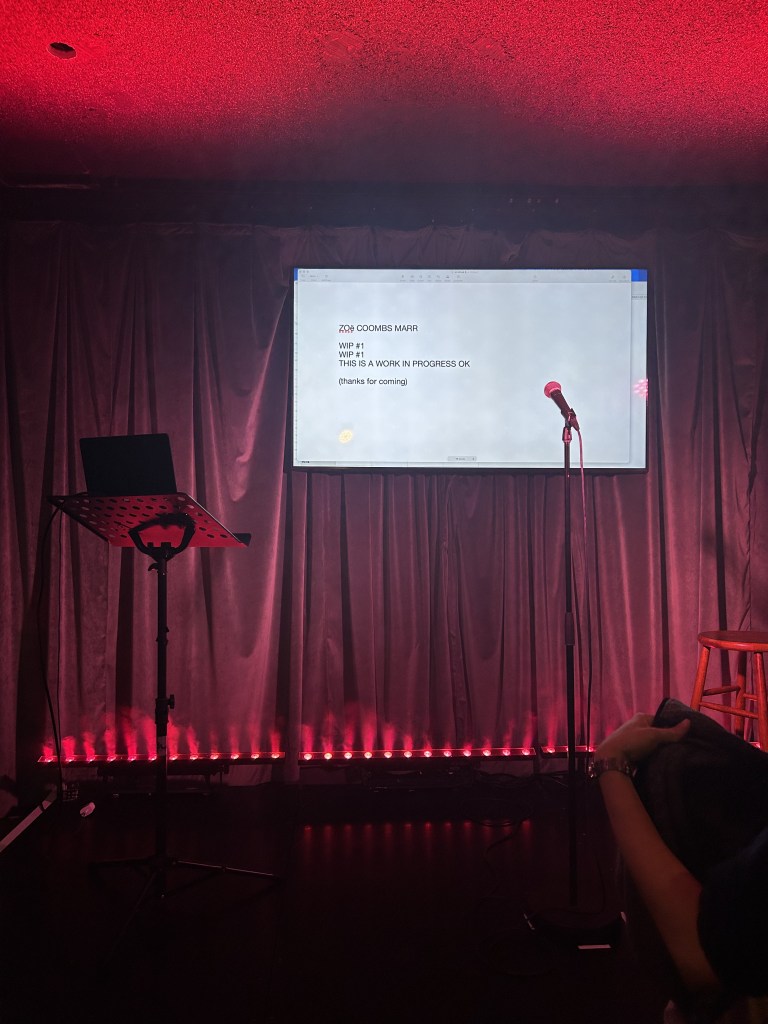
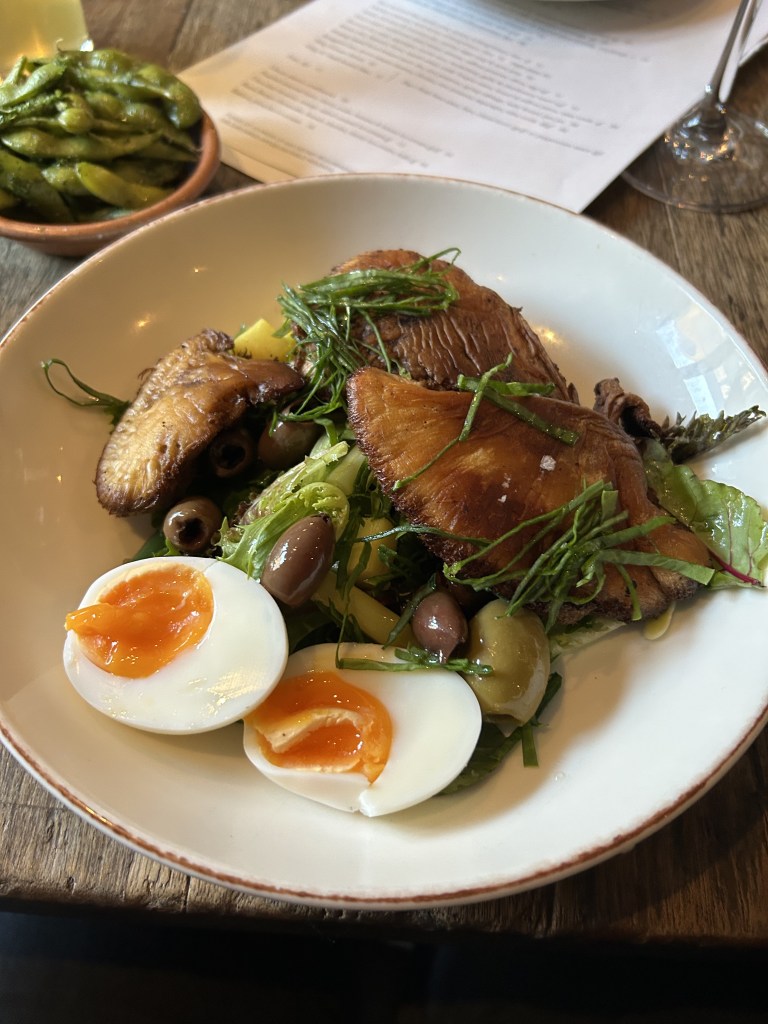
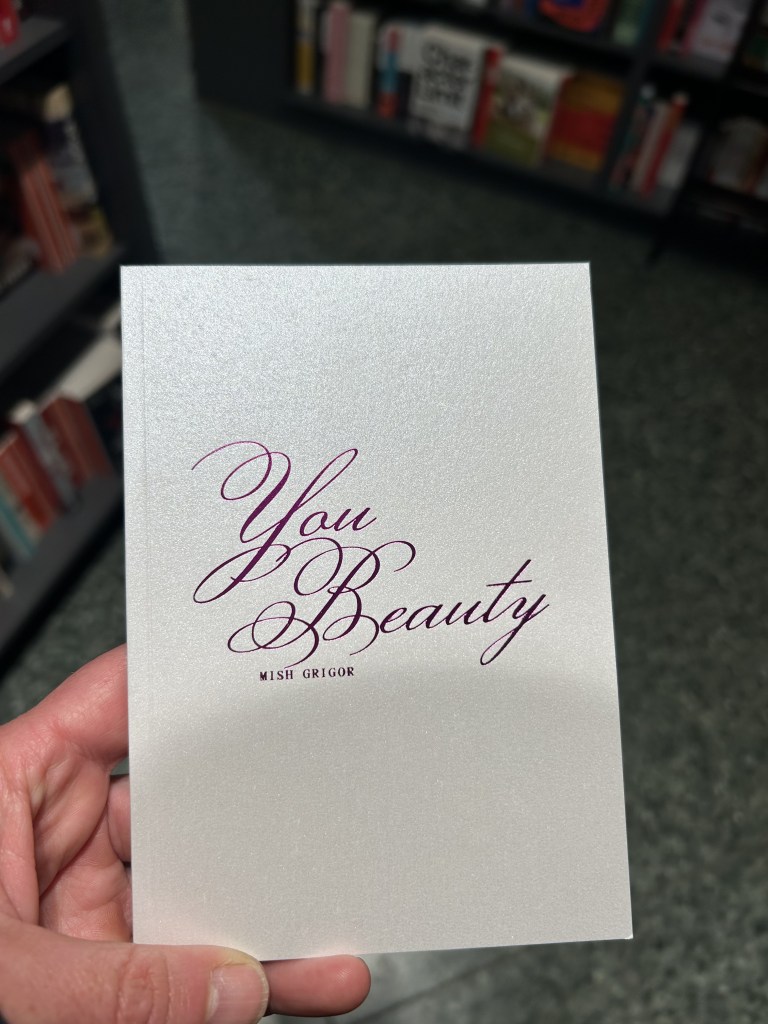
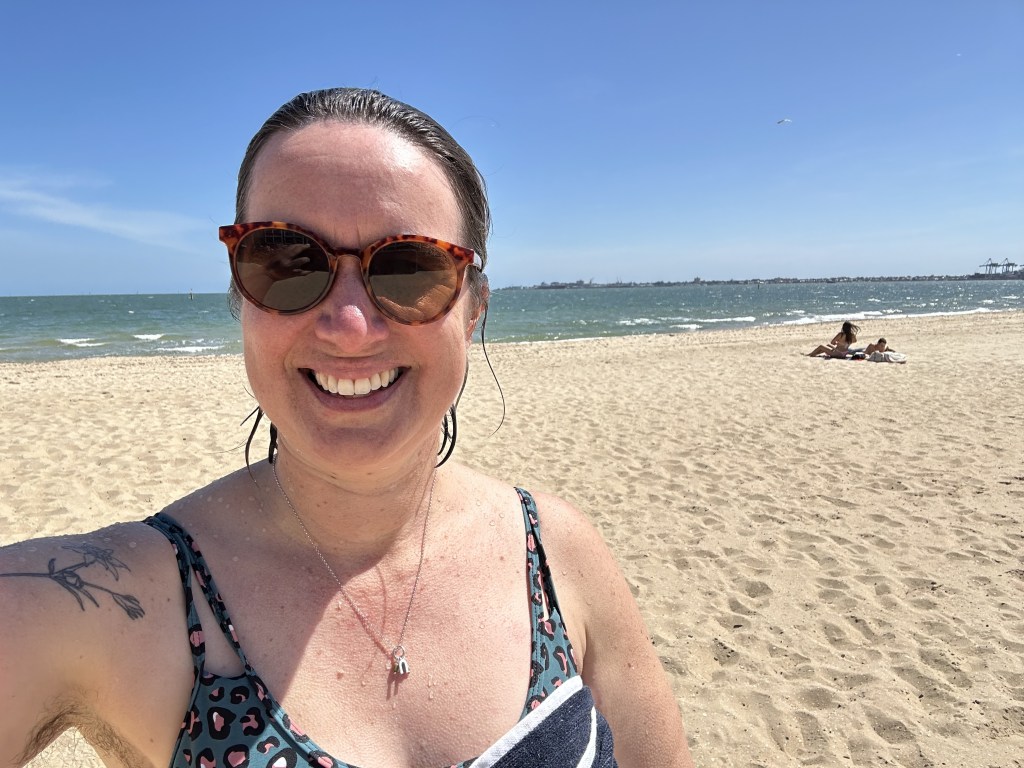
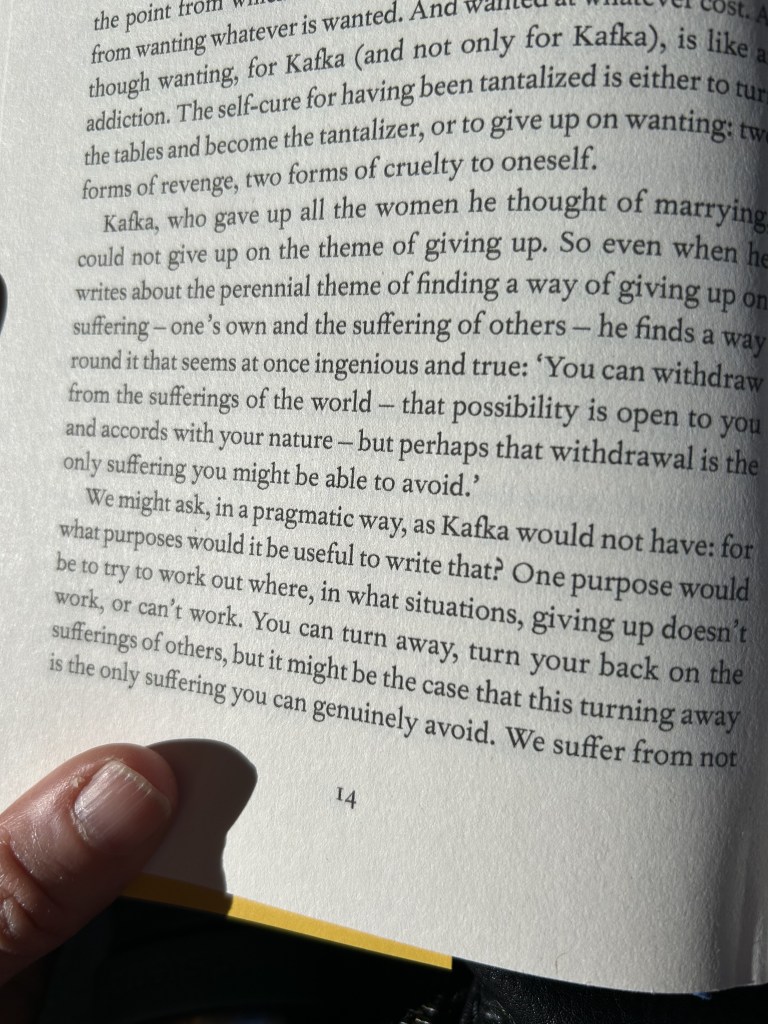
In Naarm I also enjoyed good vegetarian choices at restaurants, had a shiatsu massage, started a new running program, Went swimming, saw an old friend’s comedy show and picked up another old friend’s book (and other books). I like living and working on Anaiwan Country, but Work trips to the big city meeting new folks can be very good for the soul.


 Community Weathering Station (Cows)