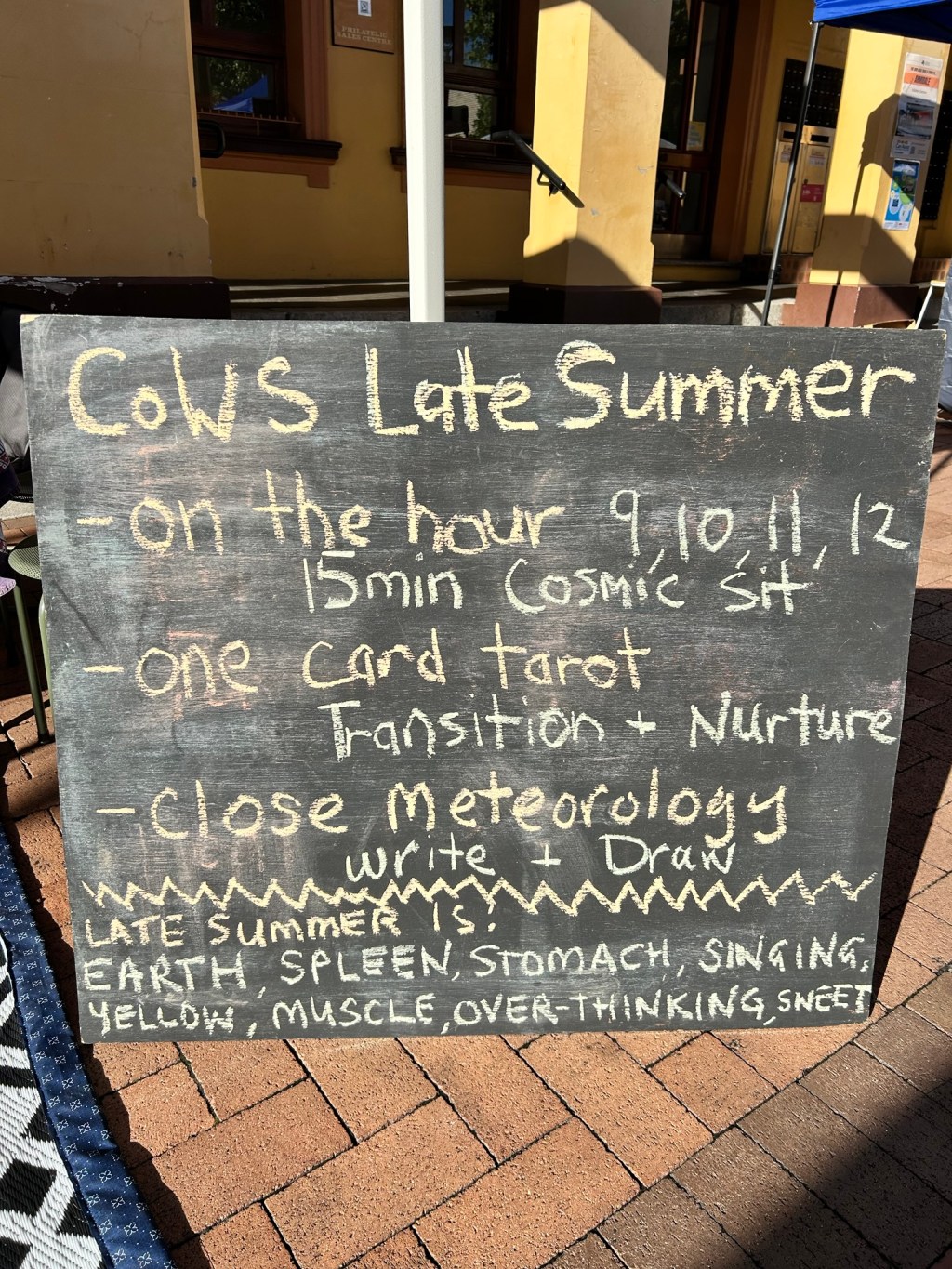
Late summer is the fifth season in traditional chinese medicine (TCM). I haven’t yet posted here that I am also studying shiatsu but I am. I’m getting closer to finishing first year (which i am doing extremely part time). Shiatsu is an alternative career path for me if the whole university system collapses. But it is also a complement to the weathering work. Shiatsu is based on TCM principles which are extremely weathery, Seasonal, Elemental. Thermoregulation, which is a key part of the smooth flow of qi, is central to the bodywork practice.
For me It adds a new layer of rigour to my thinking about embodiment and weather. one where there are ways of learning about and recognising different patterns of heat and cold, dryness and heat in the body that are leading to discomfort and disharmony, but also ways of treating that based on the interconnections of all the parts of the body and its relationship with the wider world.
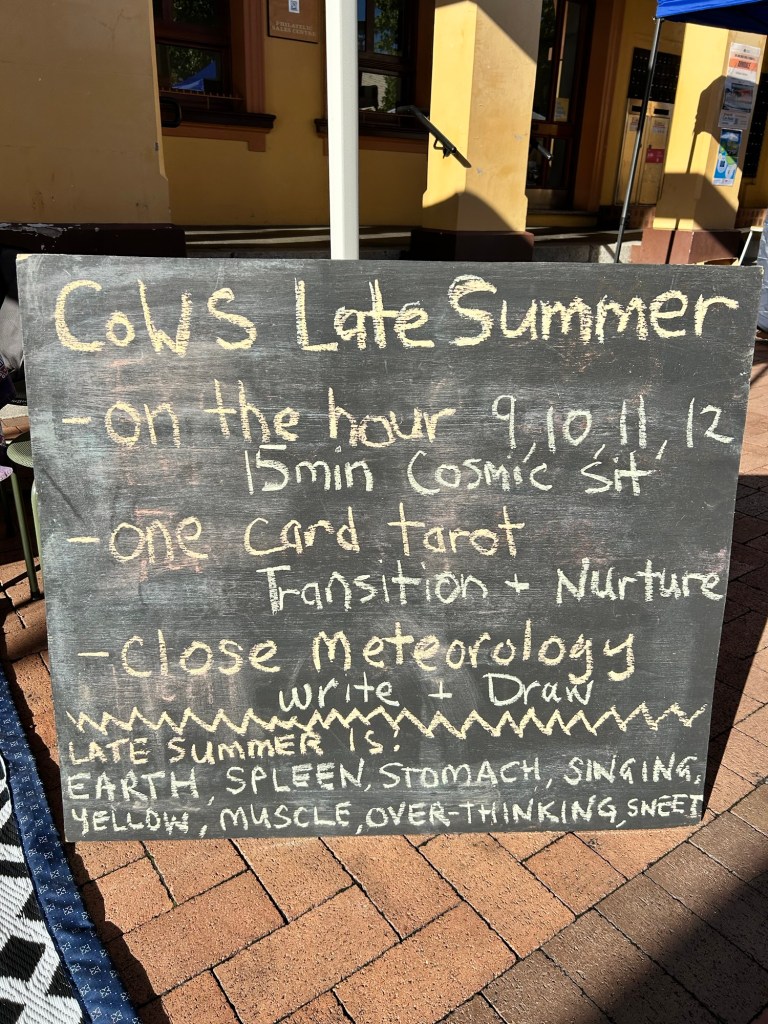
As part of setting up the stall on February 22, I got to thinking about how it was happening in late summer as the time of year between the end of februrary and the autumnal equinox. It’s a period of transition and nurture where we want to try to be as grounded as possible after the fiery yang heat of summer. Late summer signals the transition to the yin months of autumn and winter.
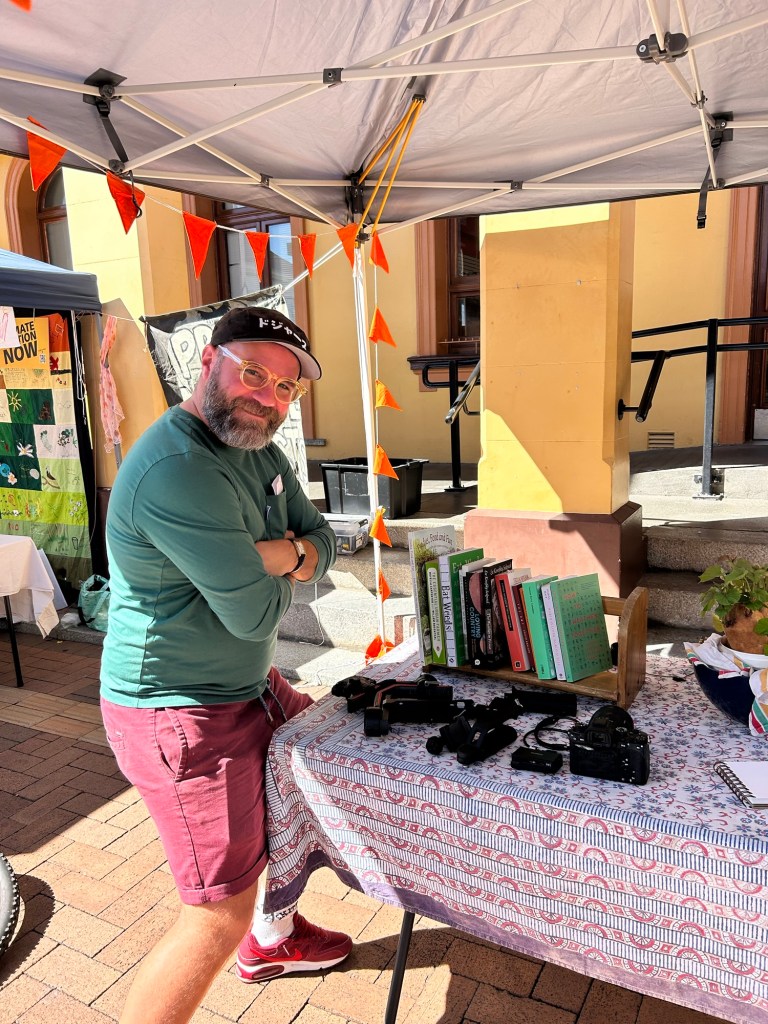
It was also where I needed to set up the stall to mirror the drawing by tessa in the book. So it was a first for me setting it up this way as the illustration was an impression. It was fun and actually acted as a great enabling constraint.
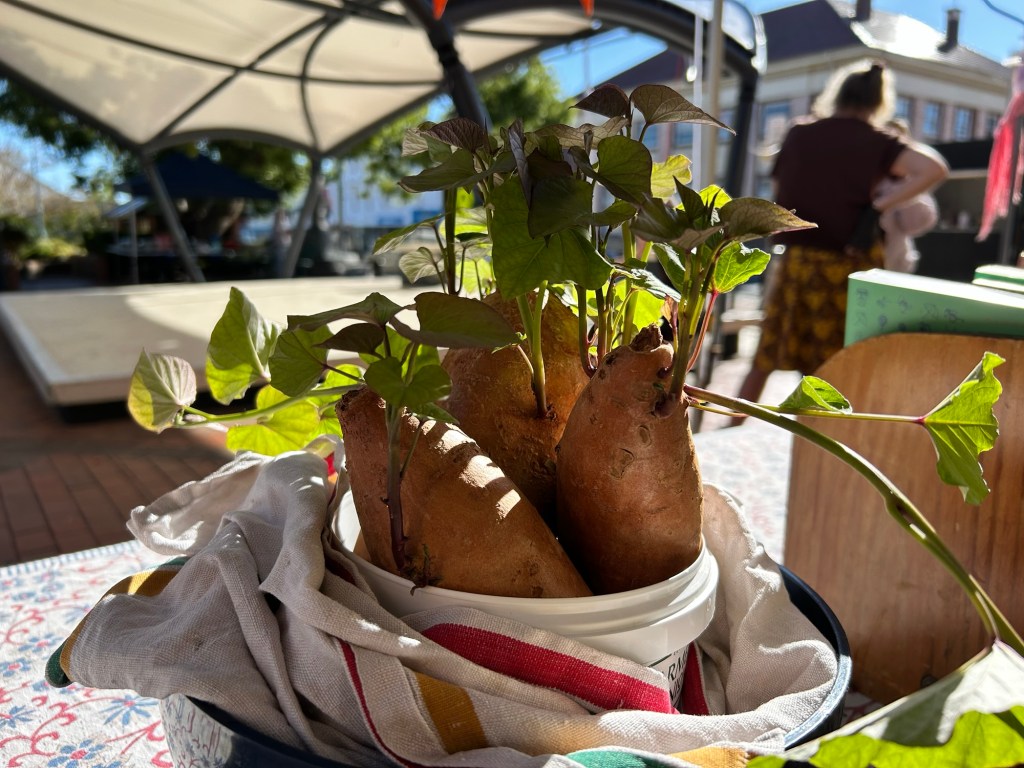
Late summer is symbolised by the earth element and the meridians of stomach and spleen. this is about digestion and processing what’s come. Starting to cool off internally and externally. Grounding practices that pull the energy down through the body help with the cooling.
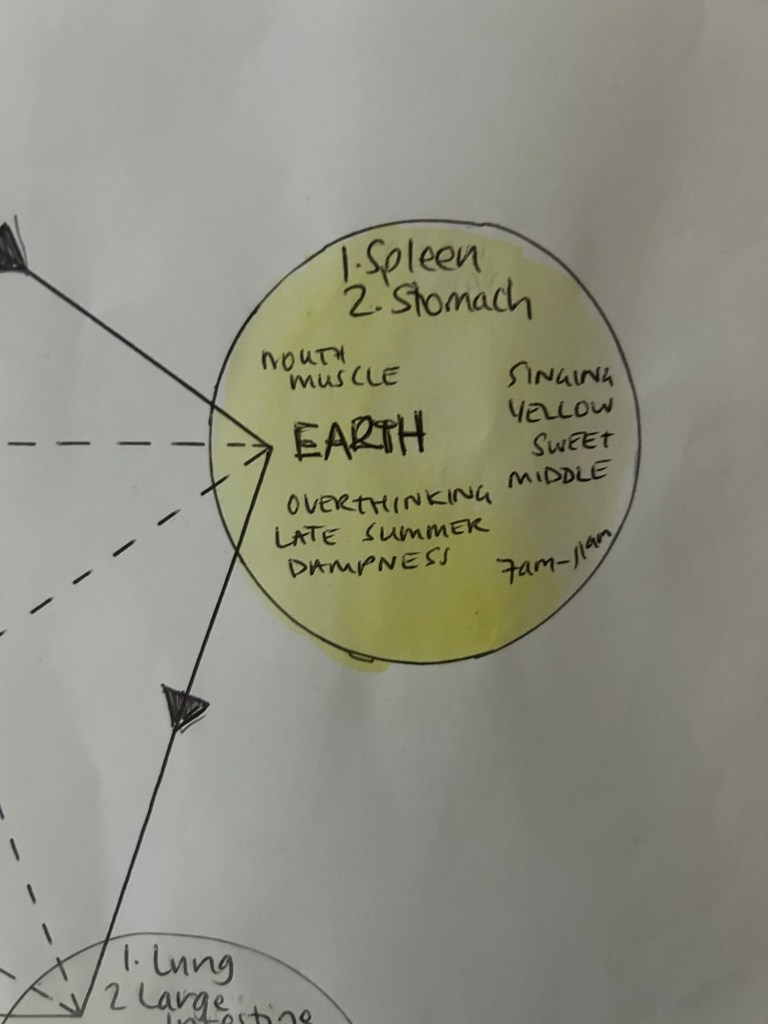
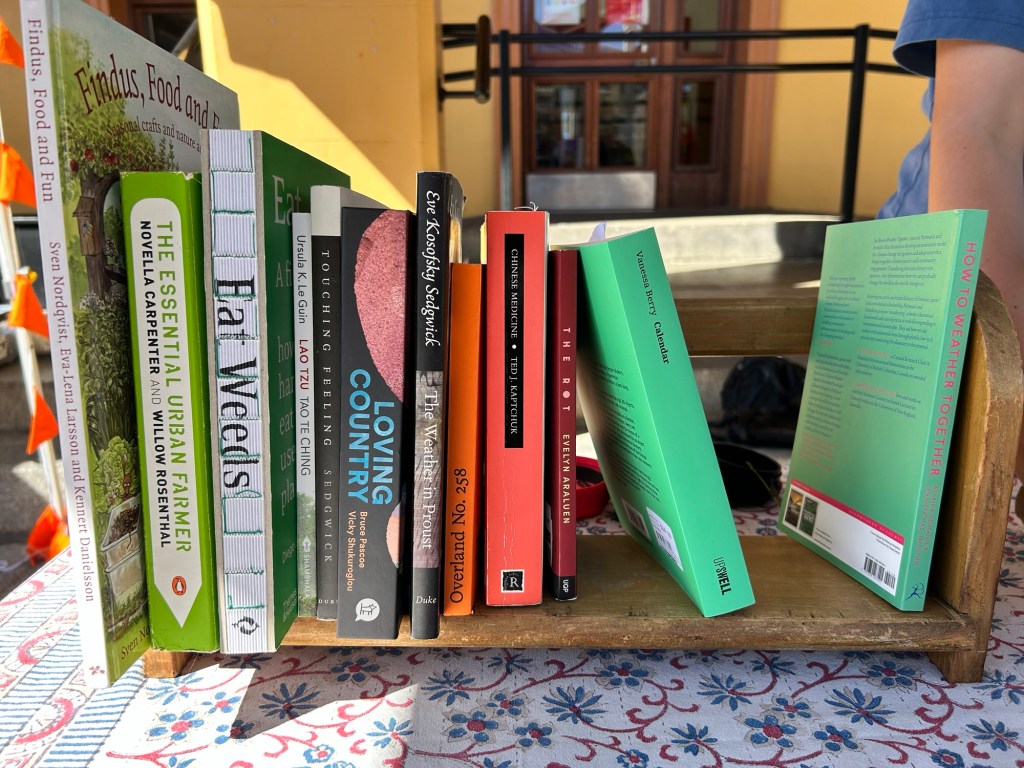
It was a first for me trying to integrate tCM ideas into the stall activities & Library, but a nice development for the stall and one i hope to do again!
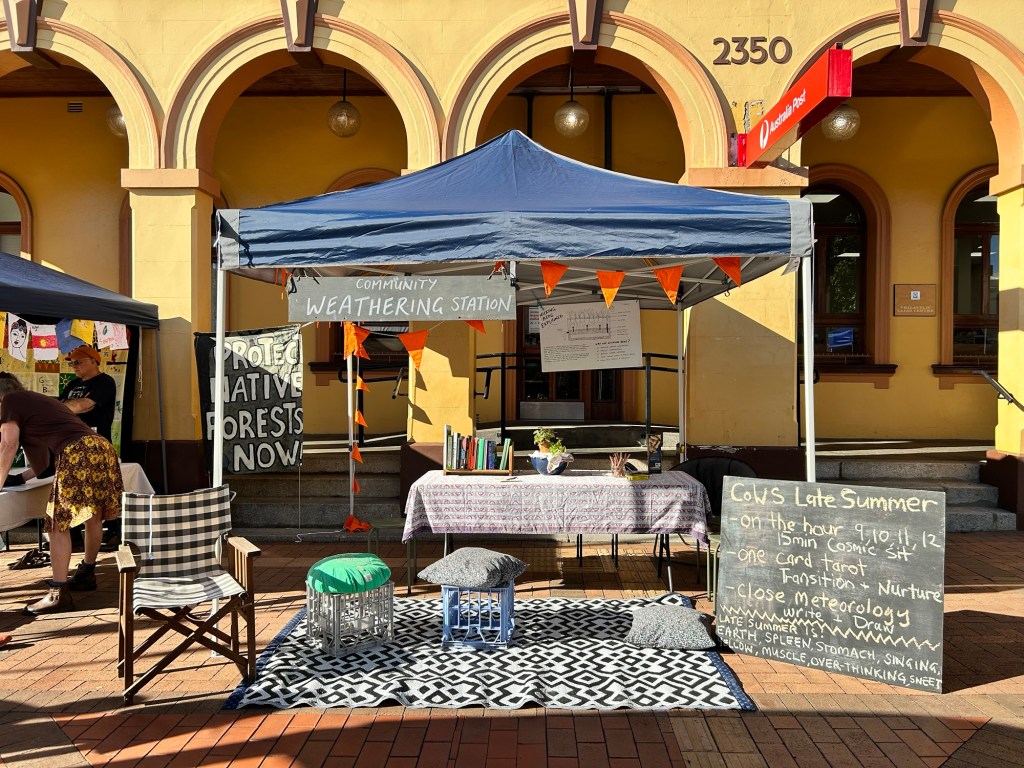
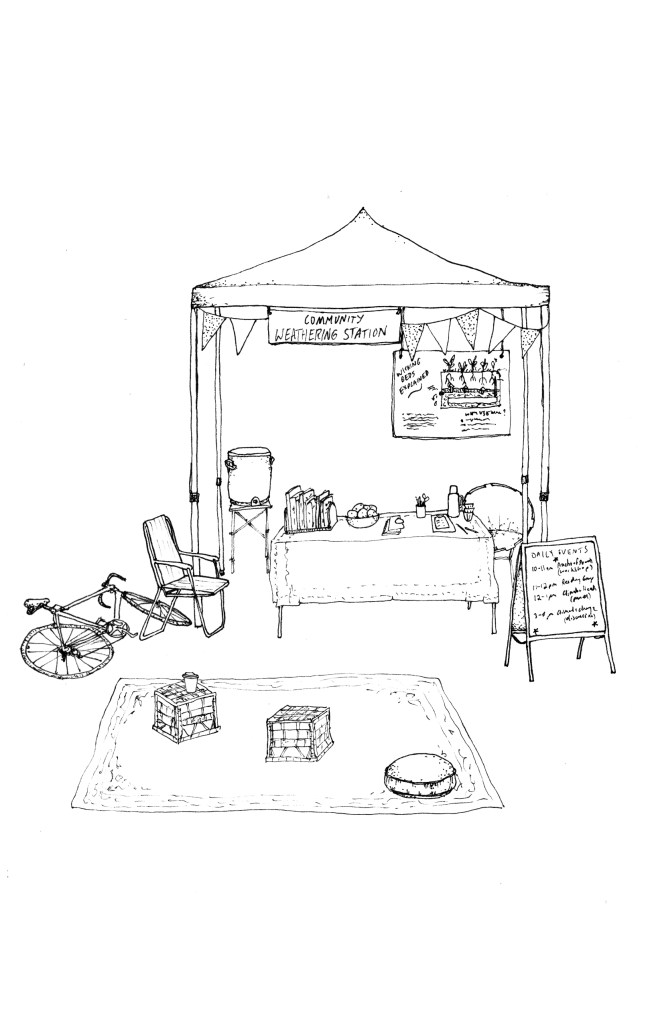
 Community Weathering Station (Cows)